Catching liver cancer while it can still be treated: Why we've invested in Sycai Medical
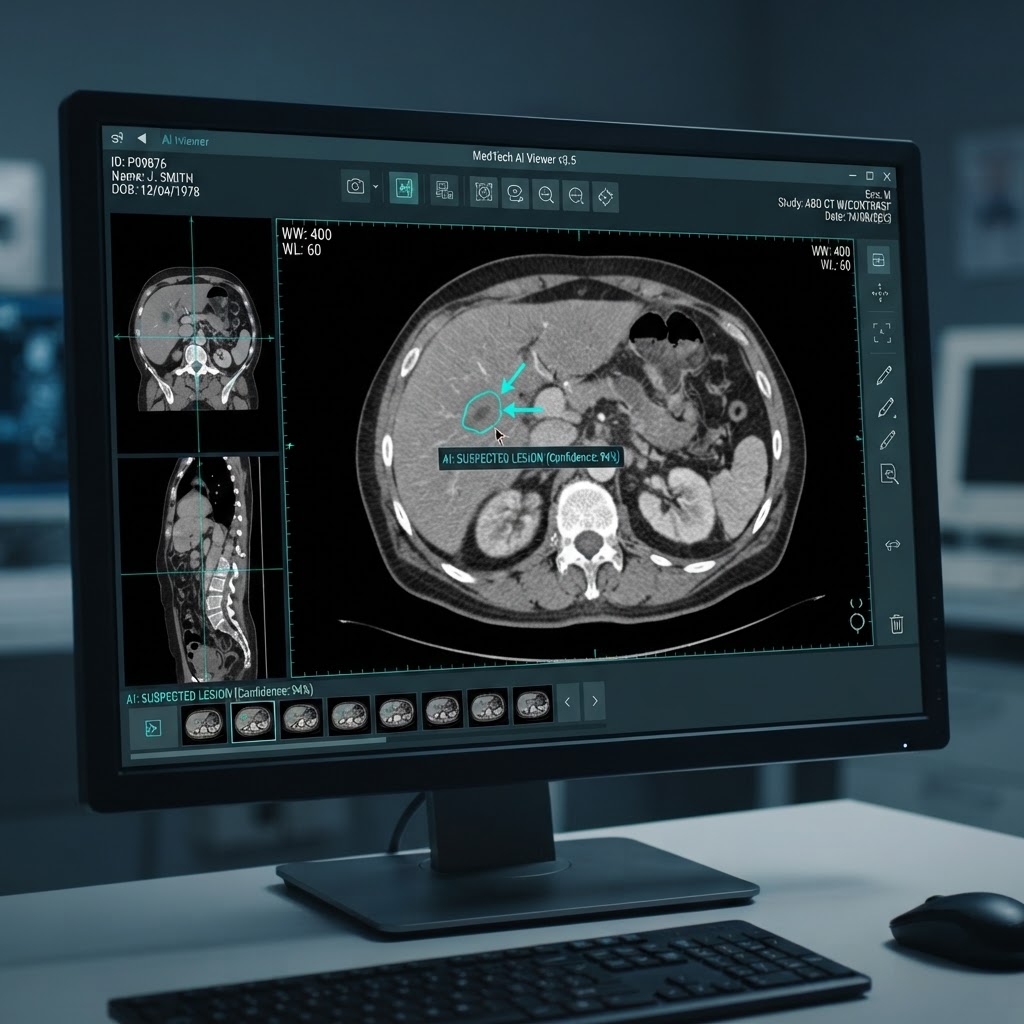
A liver tumour found while it is small can be treated. Found late, the options narrow fast, and that is how most liver cancer is found. It remains one of the leading causes of cancer death worldwide, and hepatocellular carcinoma accounts for roughly 80% of all primary liver cancers.
Every day, thousands of abdominal CT scans are performed in European hospitals for reasons that have nothing to do with cancer. A back complaint, an infection, a check on something else entirely. Inside some of those images, an early liver lesion is already visible, in a study nobody requested to look for it.
Radiology departments are reading more studies than ever, and the volume alone decides the outcome. A small lesion, in a scan requested for something unrelated, is the easiest thing in the world to pass over.
That is the gap Sycai Medical was built to close.
What Sycai Medical does
Sycai Medical, built in Barcelona, applies AI to abdominal imaging diagnostics. Its new solution, LIRVEA™, reads routine abdominal CT scans automatically and identifies solid liver lesions, including hepatocellular carcinoma, intrahepatic cholangiocarcinoma, lymphomas, and liver metastases, even when they turn up incidentally in a study performed for an unrelated reason. It measures them, localizes them, and follows them across later scans, so progression is tracked rather than rediscovered. It runs inside the hospital's existing PACS and RIS systems, without asking radiologists to change how they work.
In the company's clinical validation study, the algorithm reached 90.7% sensitivity and 86.8% specificity.
In July 2026 it obtained CE marking under the European Medical Device Regulation, making LIRVEA™ a Class IIb medical device authorized for clinical use across Europe. It is the second device the company has taken through MDR, after its pancreatic product cleared in the summer of 2024.
Why we invested
We co-led Sycai Medical's €3M round in January 2025 through our BSocial Impact Fund, alongside LUMO Labs, Athos Capital, and Namarel Ventures.
The company was founded in Barcelona in 2020 by Sara Toledano, Javier García, and Júlia Rodríguez, and is incubated at Barcelona Activa. They started with the pancreas, detecting premalignant lesions while they were still benign and automating the follow-up from there. The pattern is the same one they have now brought to the liver. Find the thing early, then keep watching it.
They could have built a detector and stopped there. Detection alone demos well. Instead they built the follow-up, the measurement, the structured report, and the integration into systems radiologists already use, because a radiologist only acts on what reaches them inside their normal workflow. Getting a Class IIb device through MDR takes years, and it is the slower path by some distance. They have now taken it twice.
"One of the biggest challenges in liver cancer is that many lesions are detected too late or are found incidentally in studies requested for other reasons. This represents a missed opportunity for earlier intervention," said Alfonso Martínez, CEO of Sycai Medical. "At Sycai Medical, we work to ensure that no relevant finding goes unnoticed."
With the liver algorithm cleared, the company is consolidating in Europe and preparing to enter the United States.
Most tools built for radiology are built to make the reading faster. This one is built so that the scan someone had for something else is the one that catches their cancer in time.
Building for a healthier world?
If you're working on aging, children's health, or the climate transition, we want to hear from you.
Get in touch